INTEGRITY ASSESSMENT IN WORKPLACE

With a 92% model reliability, assess integrity, reliability and transparent workplace behavior using scientifically grounded tools.
OriginalSkills provides organizations with Integrity Assessment, a model based on:

Integrity  

Business Ethics Index 

Transparent Behaviors

(in-depth assessment of specific professional intentions, experiences and behaviors using the aIAT model. )

The method. Going beyond what people declare

Through the aIAT and computer-based analysis of response times, OriginalSkills examines autobiographical associations and intentions linked to specific workplace situations. This scientifically researched methodology complements questionnaires and interviews with additional cognitive evidence.

Applications

Transparency in recruitment

Professional information

In-depth examination of specific information provided by the candidate and relevant to the position.

Motivation toward the offer

Assessment of the candidate’s actual intention to accept an offer and undertake the proposed professional path.

Interest in a managerial role

Assessment of the consistency between interest in a managerial position and willingness to assume its responsibilities and complexity.

CV reliability

Verification of whether the information included in the CV is accurate and whether artificial intelligence was used in its preparation.


Motivation, engagement and career

Intention to stay

In-depth assessment of the actual intention to continue one’s professional journey within the organization.

Compensation satisfaction

Analysis of the individual’s perception of their compensation in relation to their role, responsibilities and expectations.

Career choices

In-depth assessment of a specific intention concerning a change of role, career development or a new professional arrangement.

Confidentiality and responsibility

Confidential information

In-depth assessment concerning the protection or possible disclosure of company data, documents, projects and information.

Company resources

Assessment of specific behavior concerning assets, goods, money or other resources provided by the organization.

Compliance with procedures

In-depth examination of a specific incident concerning compliance with organizational rules and responsibilities.

How the assessment is conducted

The process consists of three steps:

Defining the question

A specific behavior, experience or intention to be examined is identified.

Designing the questionnaire

The test is tailored to the specific situation and administered online.

Processing the result

The platform analyzes response times, accuracy and quality indicators, producing a report for professional interpretation.

Continuous monitoring: company dashboard

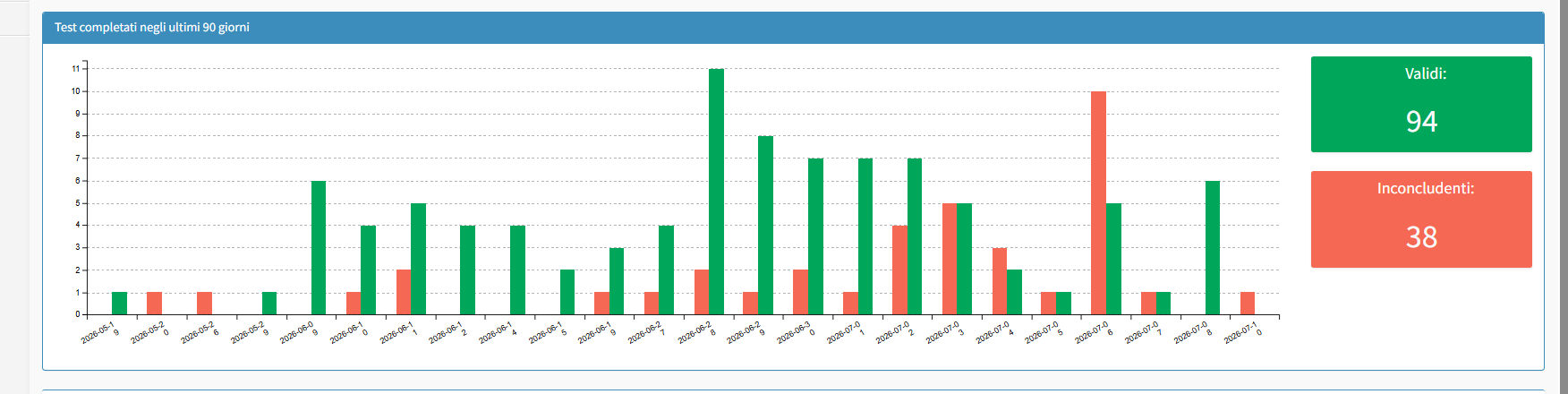
The company can administer questionnaires through a link and monitor the results using a simple dashboard that displays several validity indicators, including accuracy, faking and response quality.
Test us out

Do you have a specific case to explore?

IntegrityView enables the development of questionnaires tailored to a specific professional experience or intention.

PUBLISHED SCIENTIFIC STUDIES ON THE aIAT

  • Dave Koller, Franziska Hofer, Signe Ghelfi & Bruno Verschuere (2022) Nationality check in the face of information contamination: testing the Inducer-CIT and the autobiographical IAT, Psychology, Crime & Law, DOI: 10.1080/1068316X.2022.2102170
  • ​Sartori, G., Zangrossi, A., Monaro, M., 2018. Deception Detection With Behavioral Methods: The 474 Autobiographical Implicit Association Test, Concealed Information Test-Reaction Time, Mouse 475 Dynamics, and Keystroke Dynamics, Detecting Concealed Information and Deception: Recent 476 Developments. https://doi.org/10.1016/B978-0-12-812729-2.00010-0
  • Maddalena Marini, Sara Agosta, and Giuseppe Sartori: Electrophysiological Correlates of the Autobiographical Implicit Association Test (aIAT): Response Conflict and Conflict Resolution. Front Hum Neurosci. 2016; 10: 391.Published online 2016 Aug 30.
  • Verschuere B., Kleinberg B., Assessing autobiographical memory: the web-based autobiographical Implicit Association Test. Memory. 2016 Jun 9:1-11.
  • Maddalena Marini, Sara Agosta and Giuseppe Sartori. Electrophysiological Correlates of the Autobiographical Implicit Association Test (aIAT): Response Conflict and Conflict Resolution Front Hum Neurosci. 2016; Published online 2016 Aug 30.
  • Agosta S., Sartori G. (2013). The autobiographical IAT: a review. Front. Psychol. 4:519. 10.3389/fpsyg.2013.00519.
  • Agosta S., Castiello U., Rigoni D., Lionetti S., Sartori G. (2011). The detection and the neural correlates of behavioral (prior) intentions. J. Cogn. Neurosci. 23, 3888–3902. 10.1162/jocn_a_00039
  • Sartori G., Agosta S., Zogmaister C., Ferrara S. D., Castiello U. (2008). How to accurately detect autobiographical events. Psychol. Sci. 19, 772–780. 10.1111/j.1467-9280.2008.02156.x

Deception in the workplace

FAKE CV: Louise Jupe Aldert Vrij Sharon Leal Samantha Mann Department of Psychology, University of Portsmouth, UK Galit Nahari Department of Criminology. Bar-Ilan University, Israel. The Lies we Live: Using the Verifiability Approach to Detect Lying about Occupation. Journal of Articles in Support of the Null Hypothesis Vol. 13, No. 1 Copyright 2016 by Reysen Group. 1539-8714

    First Name*

    Last Name*

    Email*

    Phone*

    Company*

    Do you want to have a free account to test the platform before the demo?*

    Message

    Request a demo

    It only takes a 30-minute video call to show you the benefits of Original Skills

    © Copyright 2024 OriginalSkills srl
    P.IVA 02477180513 - Loc. Vallone C. S. Ossaia , 39/b. 52044, Cortona (Ar.), IT
    Privacy Policy - Cookie Policy